
Maths at The Redway School
Mathematics is contained within all sensory, physical, practical, social and cultural activities; it is part of the lives of every young person, whatever their specific needs and requirements. Our curriculum is adapted from National Curriculum requirements, spanning learning from the beginning of mathematical learning for our most profoundly disabled pupils through to those students who progress to practical and abstract mathematics more akin to national Key Stage 1 & 2 aims. Children will access maths at different levels, but it will all be relevant to their lives. Learning – including cross-curricular teaching – covers thinking skills, number sense, quantity, shape, measurement, space, time, and more. Our deep-seated ambition concerns what our pupils can achieve, not what they cannot; it is about pupils’ reaching their utmost potential, enabling them to consciously and unconsciously use mathematics to access as full a life as possible.
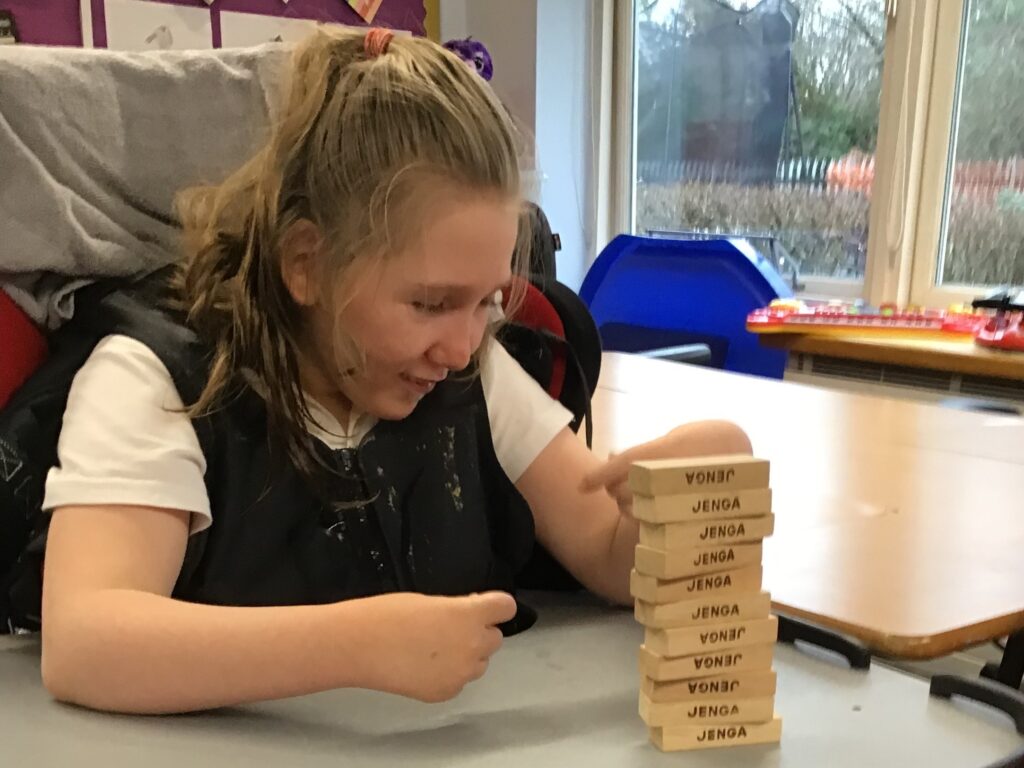
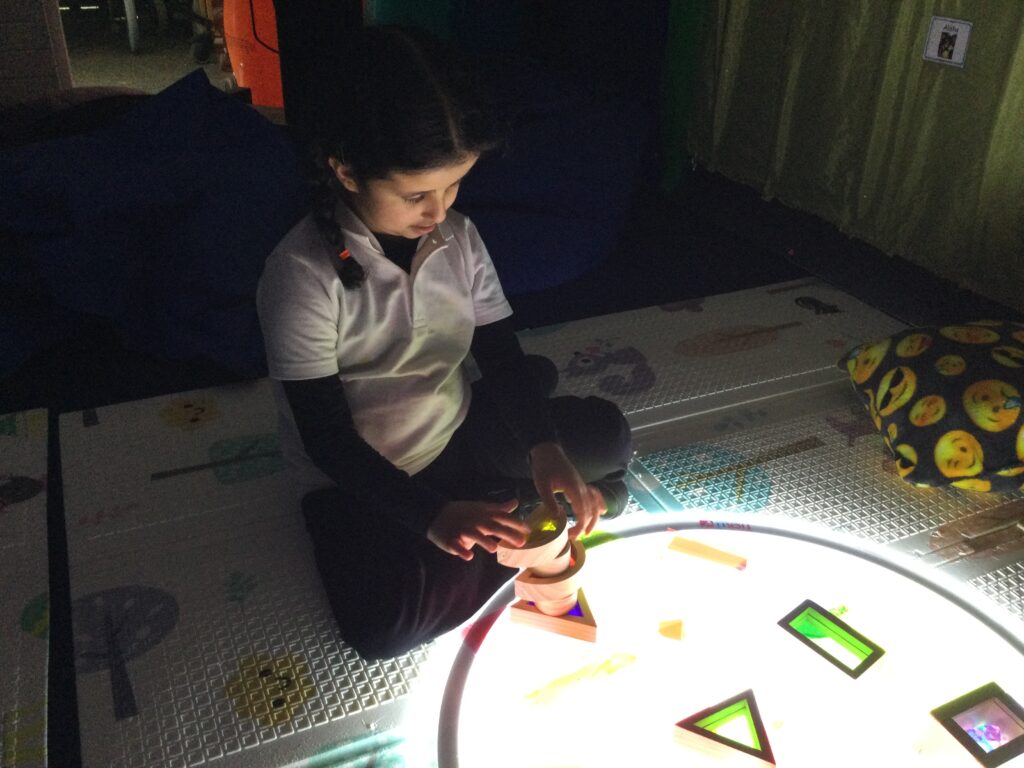
Our Curriculum is split into pre-formal, semi-formal, and formal.
Pre-Formal: Maths forms an integral part of learning to understand the world around them, and their sense of self. The curriculum reflects the ability and needs of these pupils and the prerequisite skills needed to engage with formal mathematical. Pupils who have not yet reached concrete stage are supported in there learning through sensorimotor activities (Piaget’s: Theory of Child Development, typically from birth to 2). The sensorimotor stage is where we learn about the world using our senses to interact with their surroundings and includes six areas:
- Reflexive- respond reflexively to touch or other stimulation, often by sucking and grasping. These actions will eventually become intentional.
- Primary Circular Reactions
- Secondary Circular Reactions
- Coordinating Secondary circular reactions
- Tertiary Circular Reactions
- Early Symbolic Thought
Semi-Formal: Pupils continue to develop their understanding of maths through problem solving in play and real-life situations. Semi-formal learners develop mathematical thinking through focused learning opportunities that are differentiated according to pupils need. Pupils are encouraged to develop problem solving skills. As part of our semi-formal curriculum, many of the pre-key stage standards are incorporated. It is in this pathway that pictorial representation is used.
Formal: The outcomes within our formal strand link heavily with the National Curriculum. The formal curriculum builds upon and extends the knowledge, skills and understanding introduced in the semi-formal curriculum. Symbolic representation is used although both concrete and pictorial can still be used for support particularly when re-enforcing or introducing new topics. As part of our curriculum design, it is developed to ensure that pupils:
- Can become fluent in the fundamentals of mathematics and problem solving and develop conceptual understanding.
- Can use mathematical language to explain their thinking and to reason mathematically
- Can solve problems by applying their mathematics to relevant real-life situations and preserving in seeking solutions.